


Carrying the teaching of His Judo Master: “For the Community”
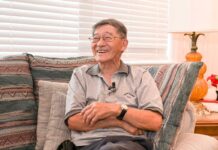
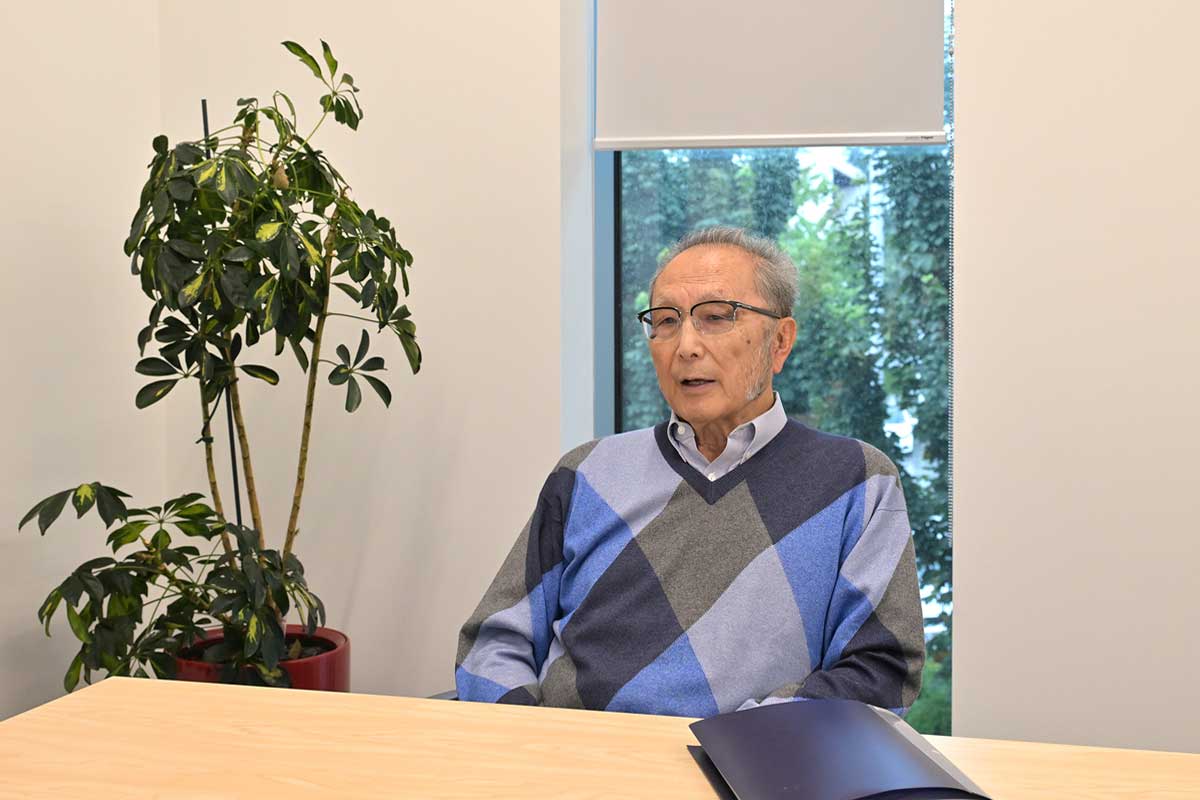
Mr. Jim Kojima (Yuzuru Kojima)
Born in March 1938, Steveston, British Columbia
Moved to Lethbridge, Alberta in 1942, moved to Grand Forks in 1948, and returned to Steveston in 1951
Former president of Judo Canada
Grandparents originally from Gobo, Wakayama Prefecture
To a Farm in Lethbridge, Alberta
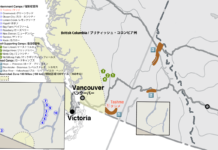
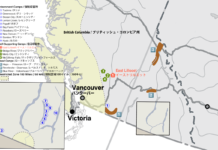
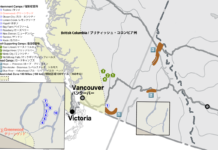
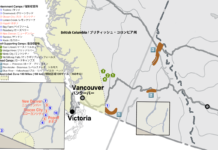
In 1942, when the Canadian government’s internment policy began, the Kojima family was forcibly relocated by train to Lethbridge, Alberta. Mr. Kojima was four years old at the time. After passing through many tunnels from Vancouver, the train first arrived in Calgary. “I remember my mother thought, ‘Well, Calgary doesn’t look like a bad place,'” he said. But their journey continued, and their final destination was Lethbridge.
Lethbridge, a town located about 215 kilometres south of Calgary, is known for its harsh winters, with average temperatures around minus 10 degrees Celsius, sometimes dropping to minus 40. The area has a dry climate and is notorious for its strong winds.
He recalled, “When we got to the railway station, there was a bunch of farmers all lined up there, and when your name was mentioned, that’s the farm you went to.” The Kojima family—consisting of his parents, grandparents, one other grandfather, and himself—numbered six in total. Internment policies allowed families to stay together if they went to a farm.
“We lived in a chicken coop, and it was about a 10 by 12 (feet) chicken coop. And in the wintertime, the chicken coop’s eaves were open. So, snow would blow in from the roof, and my mother would stuff it up with clothes or paper or cardboard,” he explained. Despite the hard conditions, he said the Blair family, the farmer they stayed with, were “amazing human beings.” “If they killed (a) pig or a cow, they gave you the meat. They were very friendly,” he added. The Blairs had four sons, and Mr. Kojima grew up with them as though they were brothers. “I couldn’t speak a word of English in those days. I only spoke Japanese, but playing with kids, you learn to speak quickly.” They also attended school together.
The Blair family was very poor farmer, so Mr. Kojima’s parents often considered moving to another farm, but decided against it. Ultimately, they stayed for five years. “Japanese people are very loyal,” he reflected.
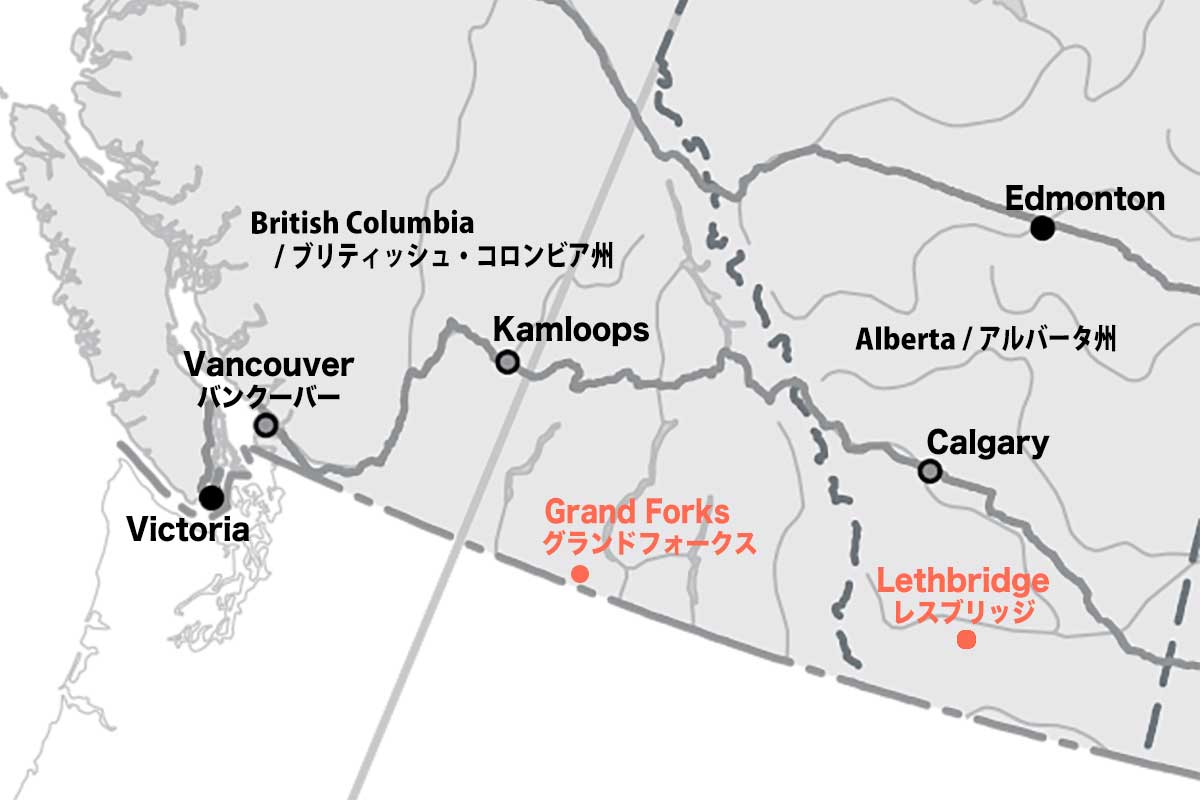
After 1947, the Kojima family moved to other farms. In December 1948, they relocated to Grand Forks, where an uncle lived. There was a community of Japanese Canadians who had also been displaced from Vancouver. By 1951, the family returned to Steveston.
Reflecting on farm life, Mr. Kojima recalled his father and other Japanese workers on sugar beet farms. In the winter, they worked at the sugar beet factory, but they were relegated to outside tasks and denied access to indoors, even for breaks or lunch. “In the wintertime, in 30 to 40 below weather, their lunch boxes were frozen, what they had in, it was frozen”, he said. “Somehow, I don’t remember listening to a lot of monku (complaints). They seem to suck it up somehow.”
Back to Steveston, Where Japanese Canadian Fishermen Were Needed
Mr. Kojima recalled that when his family returned to Steveston, Vancouver-based fishing companies were actively recruiting Japanese Canadian fishermen from across the country. “The fishing companies like BC Packers (British Columbia Packers Ltd.), Nelson Brothers (Nelson Bros. Fisheries Ltd.), and Great West (Great West Packing Co.), they went across Canada, recruiting Japanese to come back. Because the more Japanese they can get back, the more money the company’s going to make (because) they were good fishermen.”
At the time, these companies offered loans that would allow the fishermen to buy a house in the future. The fishermen never had any issue with that. “The fishing companies drew a lot of respect and trust in the Japanese fishermen,” he noted. The fishermen worked diligently, boosting the company profits. This arrangement was mutually beneficial and encouraged many Japanese Canadians to return to Steveston.
The Kojima family lived in company housing provided by Nelson Brothers until 1956, when they purchased a home and moved into it.
Trust in the Steveston Japanese Canadian Community Built by the Issei and Nisei
Steveston is essentially the only Japanese Canadian community district in Canada. Mr. Kojima reflects that its continued existence, even after the end of internment, is largely due to the contributions of the issei (first-generation) and nisei (second-generation) Japanese Canadians.
The history of Steveston is deeply intertwined with the history of Japanese Canadians. He highlights notable figures closely associated with Steveston, such as Manzo Nagano, the first recognized Japanese immigrant who arrived in 1877, as well as pioneers like Tomekichi Honma, Gihei Kuno, Thomas Shoyama, and Asayo Murakami. Their contributions extended beyond Steveston’s Japanese community, benefitting Canada as a whole.
Among their achievements, Mr. Kojima emphasizes the establishment of a hospital in Steveston in 1898 by the Japanese Canadian Fisherman Benevolent Association. This hospital was the first in Canada to adopt a universal healthcare system, and it served not only Japanese Canadians but also the local hakujin (white) community. “Caucasian women that were pregnant couldn’t make it in time for St. Paul’s (Hospital in Vancouver), they used the Japanese hospital”, he said. “So, some of my hakujin friends were born in the Japanese hospital.” The hospital became as a community resource for all, and served as a model for Canada’s current universal healthcare system, a contribution attributed mainly to Tommy Douglus and Thomas Shoyama.
After the war, plans to build a community centre in Steveston emerged. While the Issei hoped for a dedicated Japanese community centre, the Caucasians community also wanted such a facility. Ultimately, the two groups agreed to collaborate. Mr. Kojima respects the willingness of the issei pioneers to work with the broader community.
Conditions for this collaboration included building a judo room and allowing kendo practice in the gymnasium. The Japanese community contributed 15,000 dollars from Association. The centre opened in 1957. Additional taxes on Steveston residents covered the remaining costs, and the debt was fully paid off in 1977.
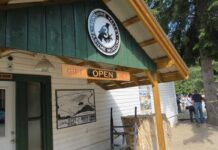
This cooperation led to the construction of the Martial Arts Centre, which opened on April 18, 1972. Supported by the hakujin community, it features a Japanese architectural design. “To me, the first thing that cemented the relationship between the Japanese and Caucasians was the building of the original Steveston Community Centre,” he adds.
When asked why the Steveston Japanese Canadian community has been so successful, Mr. Kojima said, “I think it’s the support of the City of Richmond. And, a lot of hakujin my age who grew up here have a strong passion and relationship with the Japanese.” This bond was reflected in the sister-city agreement between Richmond and Wakayama City in 1973. Despite challenges due to population differences, both cities worked hard to make the relationship official, and Wakayama’s mayor ultimately approving the agreement. Since 1975, high school students from both cities have exchanged visits. Today, this relationship is recognized by the Canadian government as one of Canada’s most active sister-city relationships.
“I think the Japanese were recognized as good citizens of Richmond and contributed to the city and the people. I just feel we’re well-respected by the community. And, everything we do, we tried to do for the benefit of everybody, not just (for the) Nikkei,” Mr. Kojima said. He emphasizes this trust earned from the city and the community “goes back to (the) Issei and Nisei. I think they paved the path for respect and the good manners that they had.”
Two Japanese Canadian Communities: Steveston and Vancouver
“Steveston history is somewhat different from Vancouver Japanese history,” Mr. Kojima explains, noting that about 75% of the Japanese immigrants in Steveston came from Wakayama Prefecture.
Steveston, located at the southwest tip of the City of Richmond and facing the Fraser River, lies just south of Vancouver. After Gihei Kuno arrived from Mio Village in Wakayama Prefecture in 1888, he invited fellow fishermen from the area, forming a fishing community primarily made up of Wakayama natives.
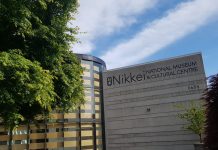
When the internment policy ended in 1949 and Japanese Canadians returned to Steveston, Mr. Kojima felt a “rift” between the Steveston and Vancouver Japanese Canadian communities. This divide became particularly evident during the establishment of the Japanese Canadian Cultural Centre (now the Nikkei National Museum & Cultural Centre).
In 1988, the Japanese Canadian redress movement culminated in a compensation agreement with the Canadian government. The funds from the agreement were used to build a cultural centre. While fundraising in Richmond, Mr. Kojima approached an elderly Issei and asked for support, explaining that the centre would be built in Burnaby. “He said, ‘Never! Before the war, the Japanese in Vancouver looked down on us.(戦争前にバンクーバーの日本人にバカにされた) Never!'” he recalled. Mr. Kojima knew there was a rift between the communities but admitted, “I knew there was something there, but I didn’t realize how bad it was.” Despite this, he and others in the slightly older generation felt it was better to have the centre in the Vancouver area than in Toronto or Montreal.
Additionally, many Issei and Nisei opposed the idea of receiving individual compensation. Since many who experienced internment had already passed away, Mr. Kojima added, “Many of the fishermen said to me, ‘kitani okane (dirty money),’ I don’t want to, my friends have already passed away‘もう亡くなってから僕だけお金もらうの間違いや (It’s wrong for just me to receive the money after many already passed away).'” This sentiment was widely shared among the Japanese Canadian fishermen in Steveston.
“I just don’t feel that Richmond Japanese feel the same way as other groups,” Mr. Kojima said, expressing the sentiments of the issei generation at the time.
Carrying the Teaching of His Judo Master: “For the Community”
In 1953, Mr. Kojima’s judo journey began when his parents told him, “Judo is starting. You’re gonna go to judo.” At that time, there were 10 black-belt fishermen in Steveston. However, the environment was far from ideal—there were no judo uniforms or tatami mats, and everything was improvised. Nevertheless, 81 children started learning judo, and five of them, including Mr. Kojima, are still doing judo on the mat. “We’re all in our 80s. Three of us are in our 86, and two are 84,” he laughs.
Mr. Kojima earned his black belt in 1957. By the 1960s, he was serving as vice president of Judo Canada, and from 1988 to 1994, he was its president. In 1974, he became an international judo referee, officiating at the Olympics and world championships. He also served as referee director of the International Judo Federation for six years. Reflecting on his judo career, he said, “I was very fortunate. I think I rode the wave. And I just kept riding the wave, and my timing of going up the ladder was just perfect.” At key milestones, he would tell his progress to his sensei (master), who once told him, “If you ever do things for your own benefit, I make you quit. If you do it for everybody’s benefit, I will help you out any way I can.”
Steveston’s connection to Judo runs deep. In 1938, Jigoro Kano, the founder of judo, visited Vancouver. A calligraphy piece he wrote during his visit, bearing the three characters meaning 「達 必 力」 “work hard, persevere, and achieve your goal”(つとむればかならずたっす:“strive and you will achieve”), still hangs in the dojo (practice hall) of the Marshal Arts Centre.
In 1973, the Steveston Judo Club began an exchange program with Tokai University, one of the top judo clubs in Japan. “(It’s a) 51-year relationship with Tokai University and, we have every two years the third-year university judo group about 35 of them, come here for our judo tournament and stay in homestays and stay here a week,” he said. Former Japanese national team members like Yasuhiro Yamashita and Kosei Inoue have also visited in the past.
Mr. Kojima emphasizes the teachings of his sensei: “My judo teacher used to say to me when you’re young, you take everything you can from your teacher, from judo teacher, school teacher, everything you can from people, but someday you have to give back.” Encouraging exchanges among young people—whether through judo or sister city programs—is his way of passing on the values cherished by earlier generations of Japanese Canadians.
“The Japanese isseis and niseis, very few of them complained even after the war when we came back here. I’d go to a Japanese fisherman mending his nets, and I’d say, ‘Ojisan (Sir),speak to me, talk to me about before the war, during the war,’ and they said to me ‘Kojima-san, shikataganai (仕方がない: there was nothing we can do)’. What’s happened, happened. They said we have to look for the future for our children and our grandchildren. If we don’t do that, then we’re not doing what we should be doing. I really admire the Japanese isseis with that kind of attitude,” Mr. Kojima said.
He believes it’s important to pass this torch to the younger generation. That is his way of “giving back.” When speaking to high school students in Japan, he tells the “tamashi (spirit)” that the Issei and Nisei left in Steveston: “Work hard,” “Never give up,” “Hardly ever complain,” “Good manners,” and “Never did things to embarrass the Japanese race.” He explains Steveston’s Japanese Canadians tried to preserve Japanese traditions and culture through cooperation with the city and all its residents. They aim to teach the young people the same spirit, manners, respect, and pride of those who left Japan over a century ago.
Reflecting on history, he remarked, “I think of historical things, and I don’t think we should do it in such a way to be negative, to be positive for future generations.”
(Text: Naomi Mishima)
Related Articles
- History of the Japanese Canadian Community
- Japanese Canadian Internment (Chronology)
- Greenwood and Grand Forks: “Japanese Canadian Stories”
***

***